
#2 On pausing places

Hello friends,
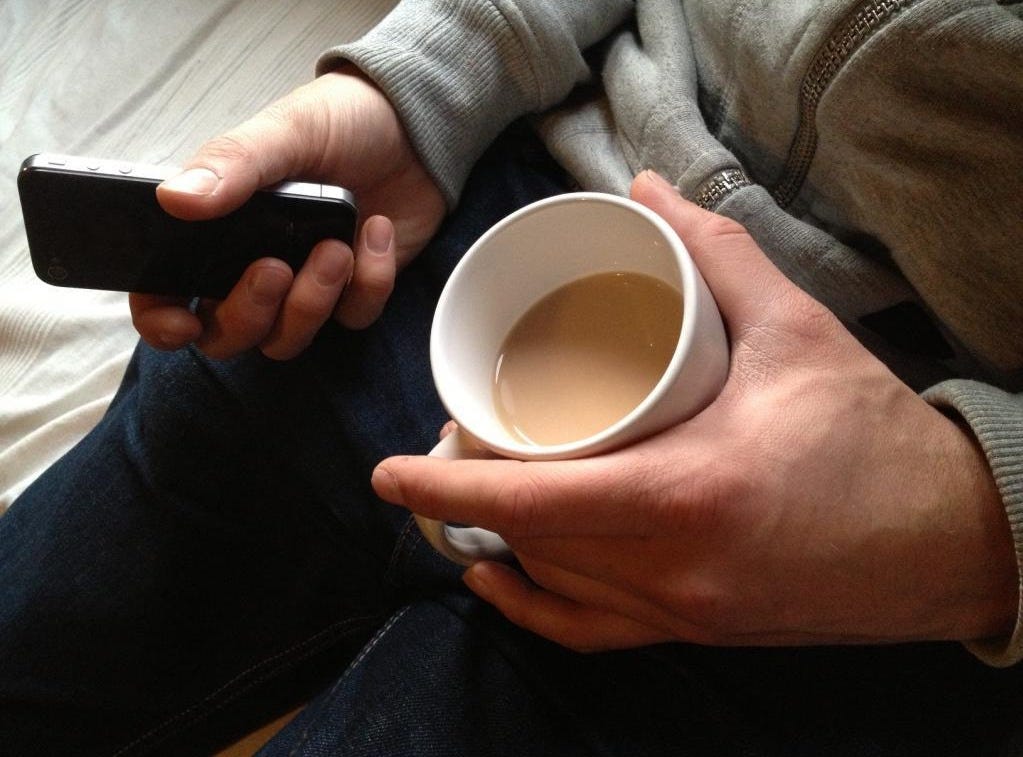
It’s been a while since I first wrote. There has indeed been a pause – which feels rather apt given the theme I’m exploring today. Perhaps before reading any further, you might like to take a pause yourself. Maybe make yourself a cuppa, look up from the screen or simply take a breath. And then, when you’re ready, come wander/wonder with me.
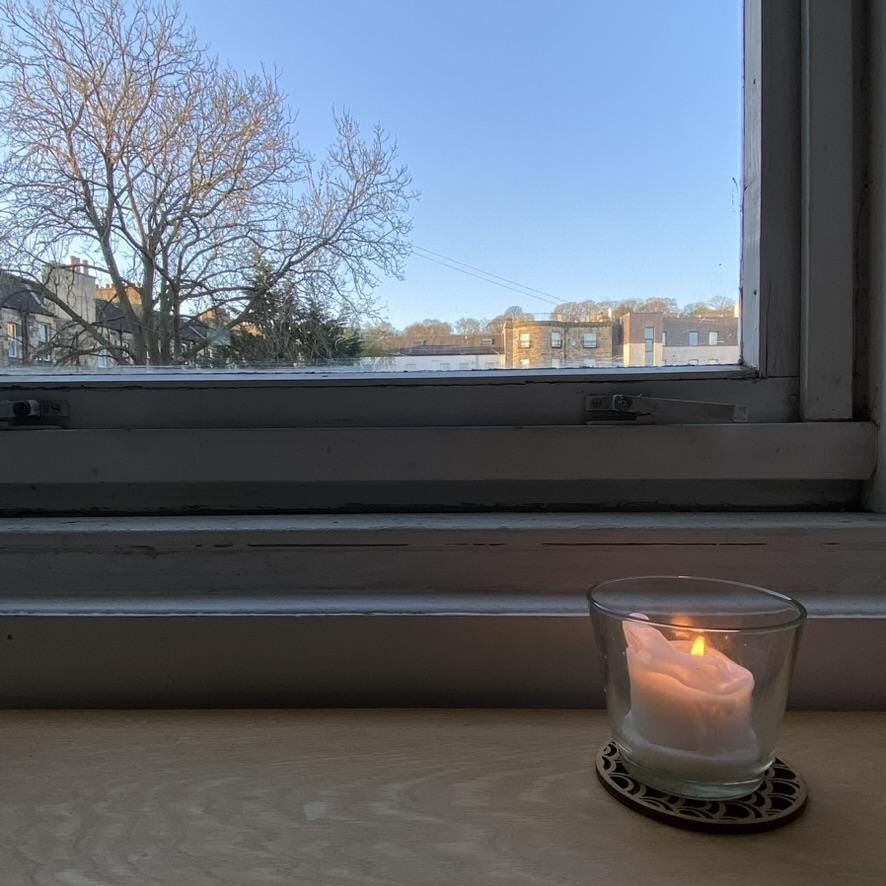
Every morning, soon after waking, I will usually light a candle. I’m not alone in this sort of ritual. It’s the way I deliberately invite a pause at the start of the day before I’m too deeply entangled in its thoughts, plans and activity.
A lit candle reminds me of gifts and mysteries beyond anything I can control and often beyond what I can see. It gives a clear nod to things that sustain and nourish me – at the most basic level: oxygen, light and warmth. Its presence reminds me I’m part of and held within a wider ecosystem. I find this a reliable lens through which to approach the day.
Pauses have the potential to do this every time. They can orientate us towards something that matters. This is why I like them. It’s also why I think we need more of them.
~
When we pause, we break the momentum of what is already ‘in play’. We create space for other possibilities – for subtle shifts... for percolation... for connection... for insights and noticings. They are powerful because the actions beyond a pause will be affected by the nourishments and perspective – however micro – embedded within it.
Robert Pynton captures this well:
“A pause is not a thing at all. It is an opening which allows, enables, permits or invites all sorts of other possibilities. These are very gentle, generous verbs: allow, enable, permit, invite. Pauses do not demand, command or control. It allows something to happen which would otherwise not occur, and you never quite know what that will be.”
~
Pauses are a kind of rest, yet they are more nuanced than simply stopping or taking a break. Neither is it their duration that defines them. Their location and tone matter more. We find pauses nestled within what is happening. They are ‘a quality of stopping that makes another kind of thinking possible’, as Gary Hirsch has said (emphasis mine).
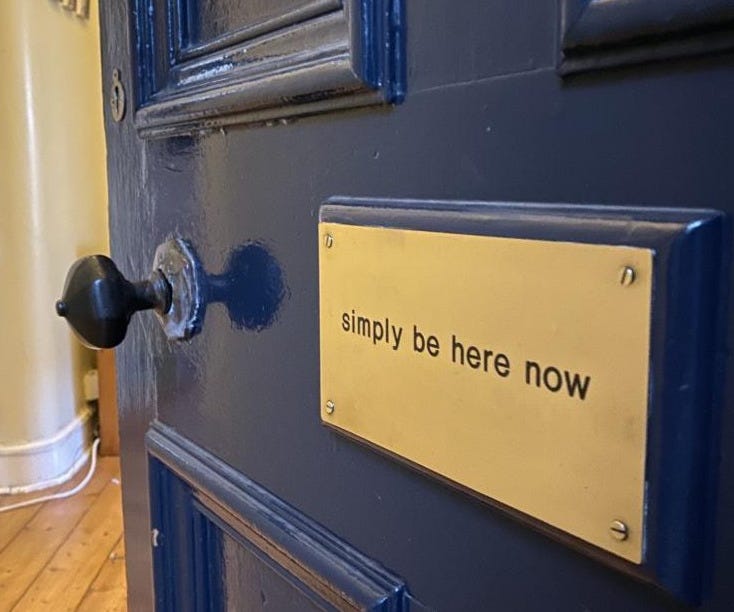
Pauses keep me sane. They sustain me when the road is long and help me notice where things are a bit ‘off’. They alert me to what is being neglected or in need of tending. They also invite me to dwell in what is good and absorb beauty. With little effort and no special skill, pauses can infuse a day, a process or a heavy heart with some softness and a bit more light.
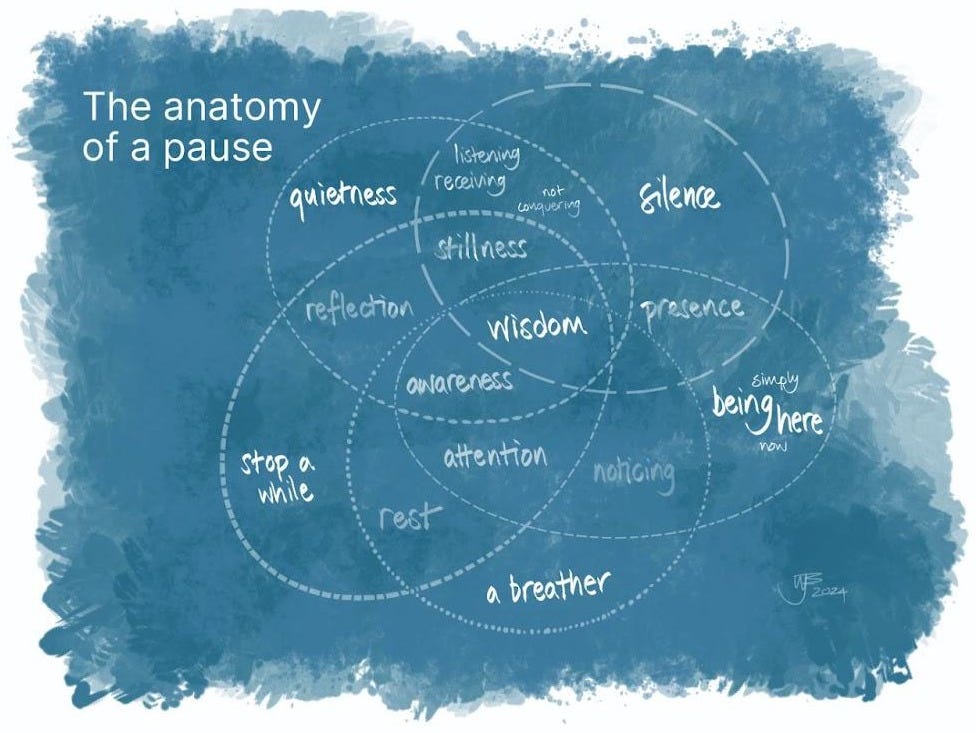
Pauses are magical because they have this remarkable capacity to change where we put our attention. They can help us be more attentive to our lives and more attentive to our world. In a pause, we have the possibility of sensing and seeing different stuff – things we simply cannot see or grasp while on the move or in the midst of a task.
~
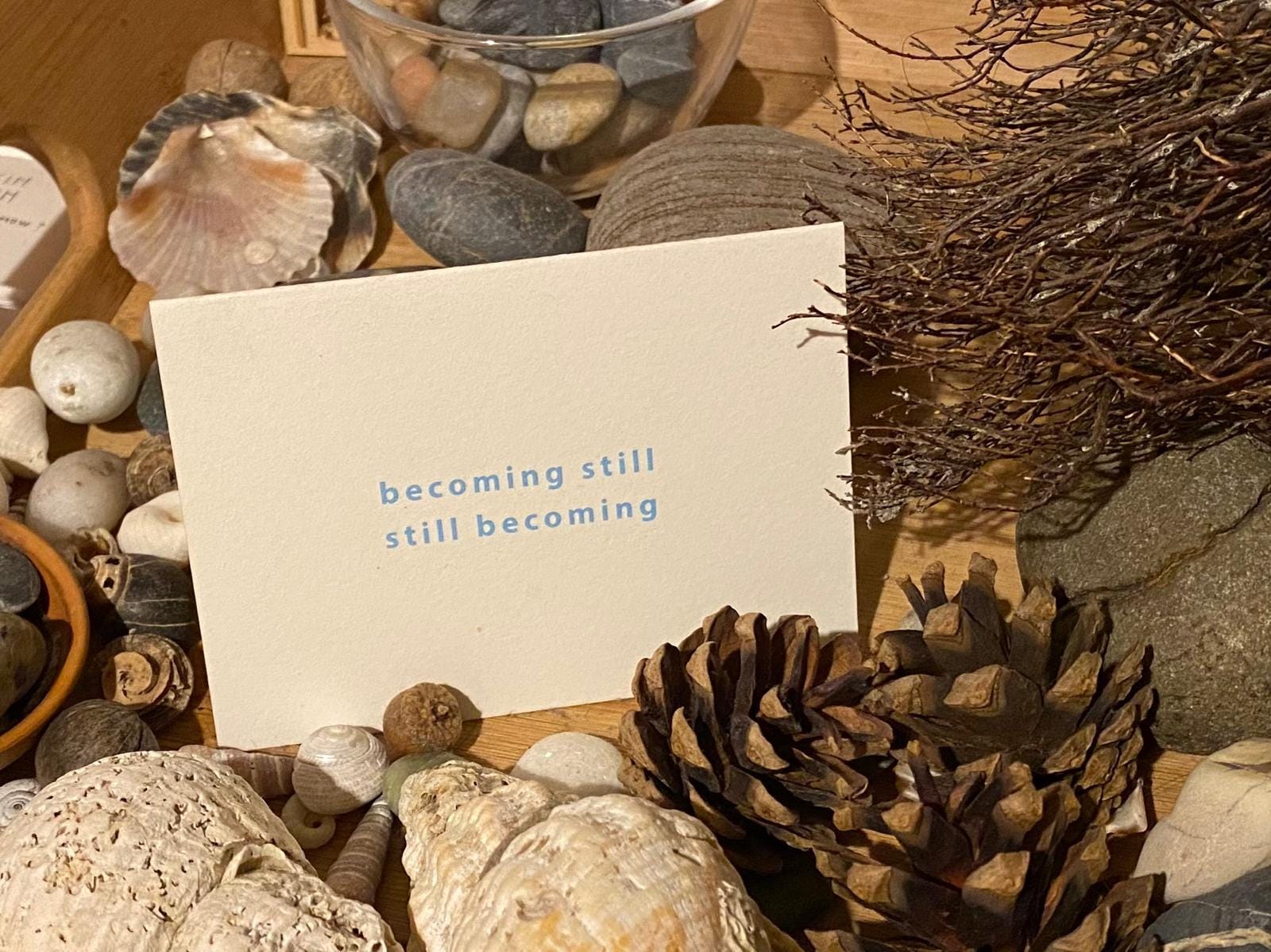
I have a theory that wisdom grows more easily in quiet places. It’s one of the reasons I’m a super fan of pausing. Though not all pauses demand silence, there seems to be a type of ‘stilling’ inherent in all pauses. For me, they offer an obvious and accessible gateway into a wiser frame of mind-and-heart. Individually and collectively.
The term ‘Pausing Place’ entered my lexicon in 2003 when it became a good fit for a weekly gathering I started hosting. At the time, my government was exploring an invasion of Iraq – something many of us fiercely opposed, resulted in heartbreaking devasations, and has been widely declared illegal.
In those days, I remember an extraordinary movement towards action – towards war and actions to prevent it. Mostly, I remember protest. And exasperation. And anger. And despair. And I remember lots of words.
Given my convictions about wisdom growing more easily in quiet places, I was concerned at the seeming absence of accessible spaces offering collective pausing and reflection. So often quiet, silent places are solo pursuits or – when they are collective – they sit within the context of a particular spirituality or faith context. I craved something more inclusive, something with less dogma.
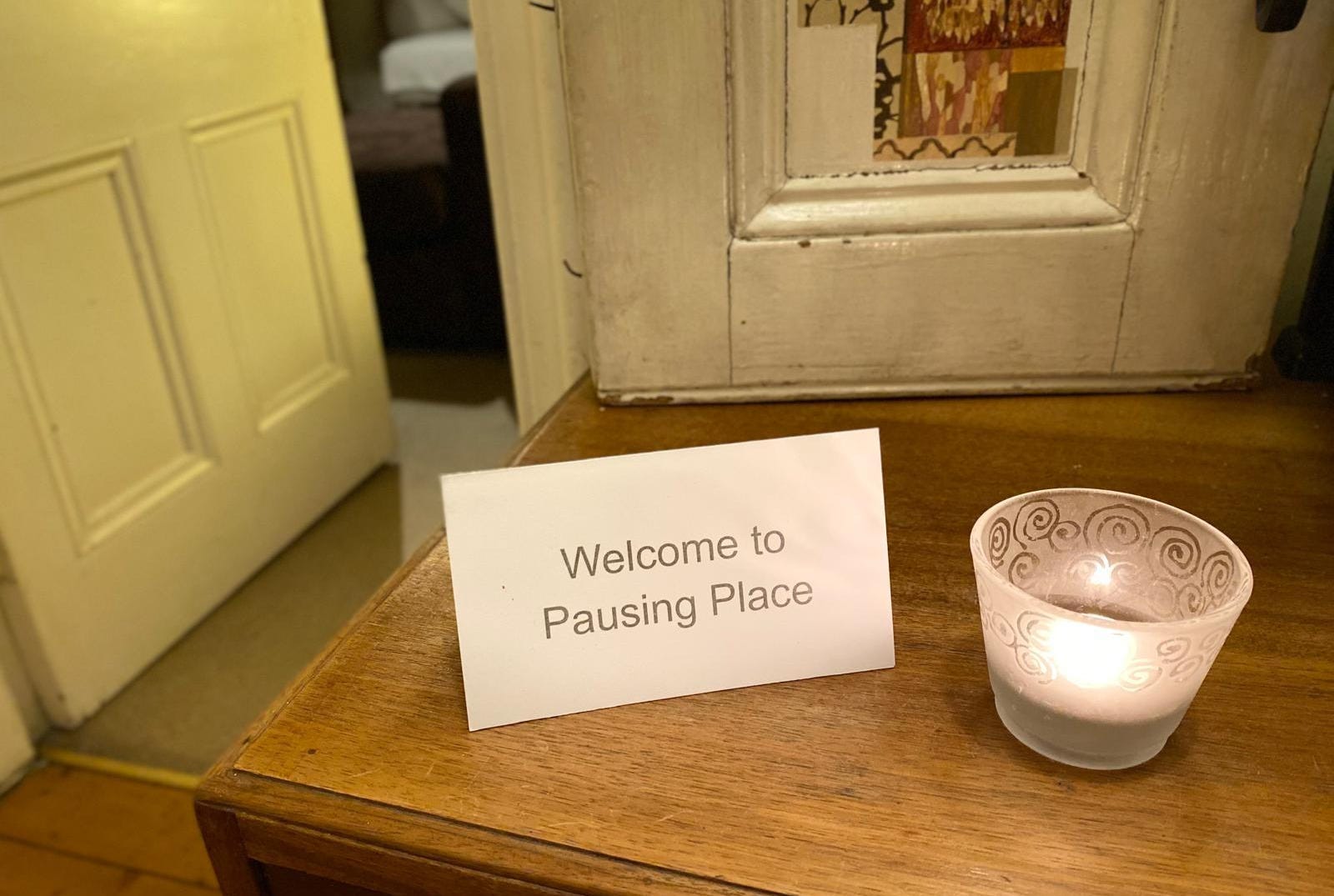
And so, Pausing Place was born – a weekly hour of communal silence – complete in itself.
Each Wednesday evening, a little (and evolving) group of people gathered. The quiet time was bracketed with Pachelbel's Canon. Afterwards some would stay on to eat simple food together.
This rhythm continued for more than a decade. It was unadvertised, yet open to anyone who heard about it and thought they might like to come along. During the hour, people self-directed how they inhabited the space – some reading, others journalling or perhaps praying, sometimes there was napping. The only ‘criteria’ was an invitation to be within the space in a way that would help hold a spirit of quietness for yourself and others also.
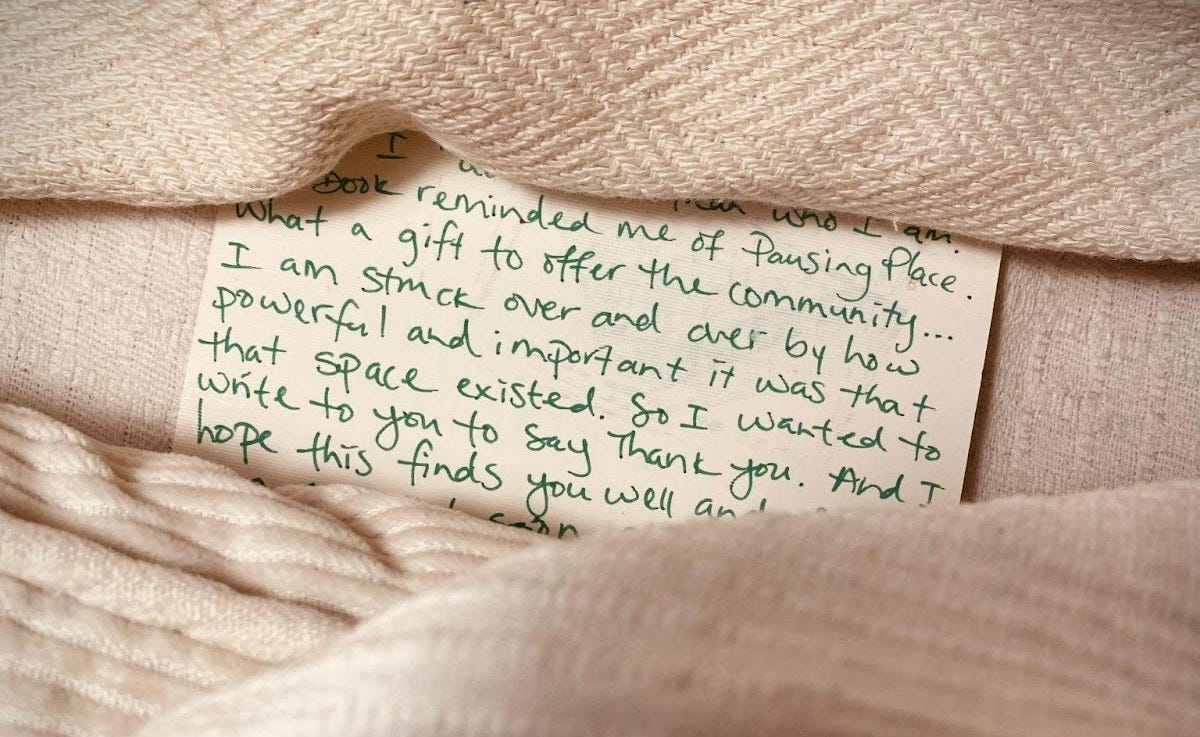
I remain deeply grateful for those 10 years where each week, like a metronome, I would join with others in this simple, deeply grounding practice. Nothing fancy. Yet surprisingly rare. Years later, people still tell me it mattered.
~
Wars and the most awful atrocities continue to rage. Many use their platforms for astonishingly parochial ends – as though the fullness of life is somehow the purview of just a few. We desperately need wisdom to be woven reliably through our collective narratives and the decisions of those who hold power.
Within our current ecosystem, my gut tells me we need to be pausing more. Individually. Communally.
We need to be working our ‘pausing muscle’ so that this practice becomes instinctive, and we can benefit from the wisdom pausing can bring – especially when rapid decisions are required.
We need our words, our actions and the plans we make to be imbibed with perspective, with wisdom. Without this, we will simply build higher walls, imagining that those behind them are vastly different and far less worthy than ourselves. We will destroy those and that which was never ours to dominate. And we will continue to collaborate in eroding what is most precious and needed for life itself.
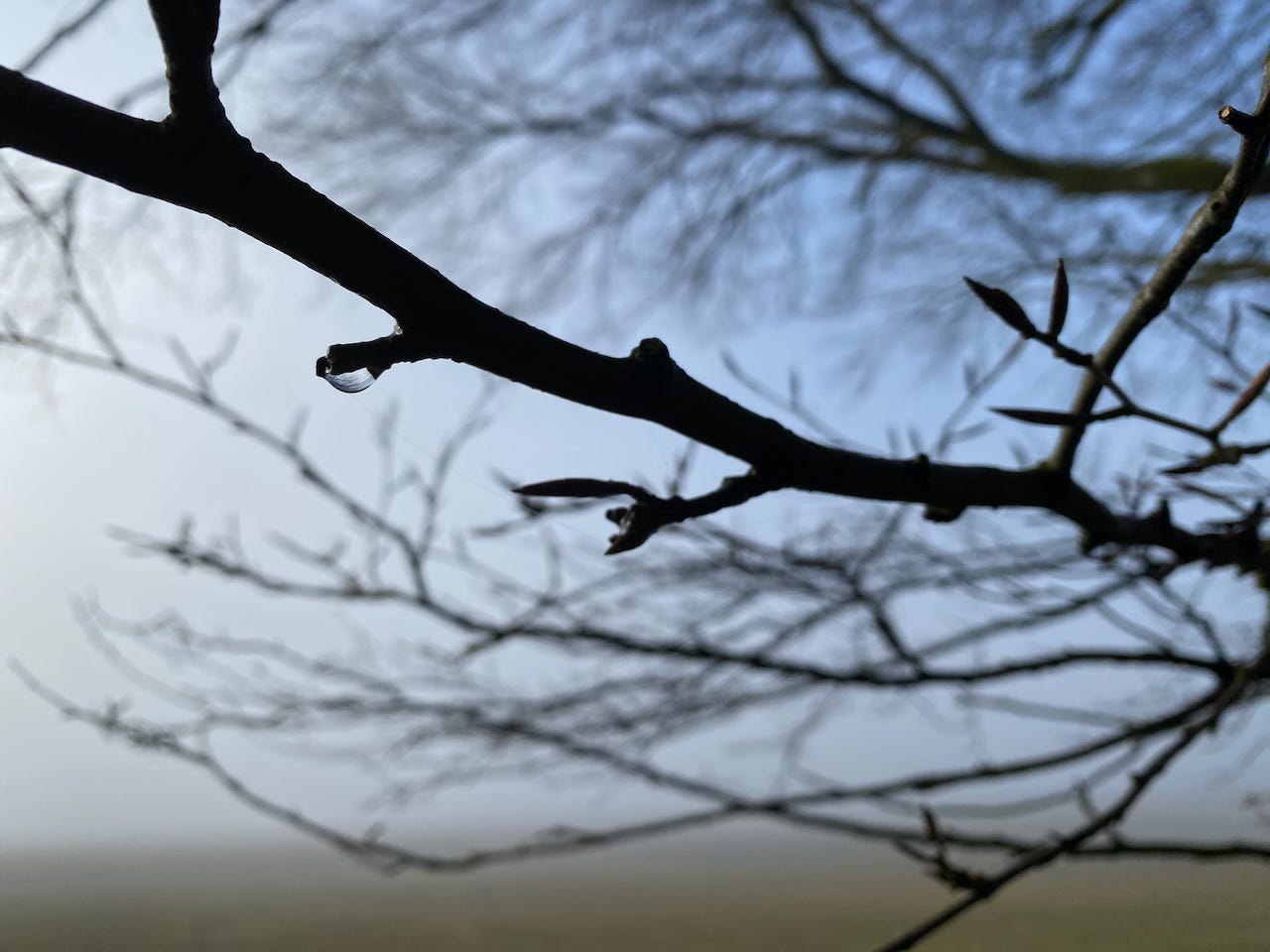
Pauses are worth our attention.
Blissfully, they are not complicated. Though, given how much my culture affirms movement, engagement and efficiency, pauses can feel radical and counter cultural to instigate. They definitely require deliberate effort.
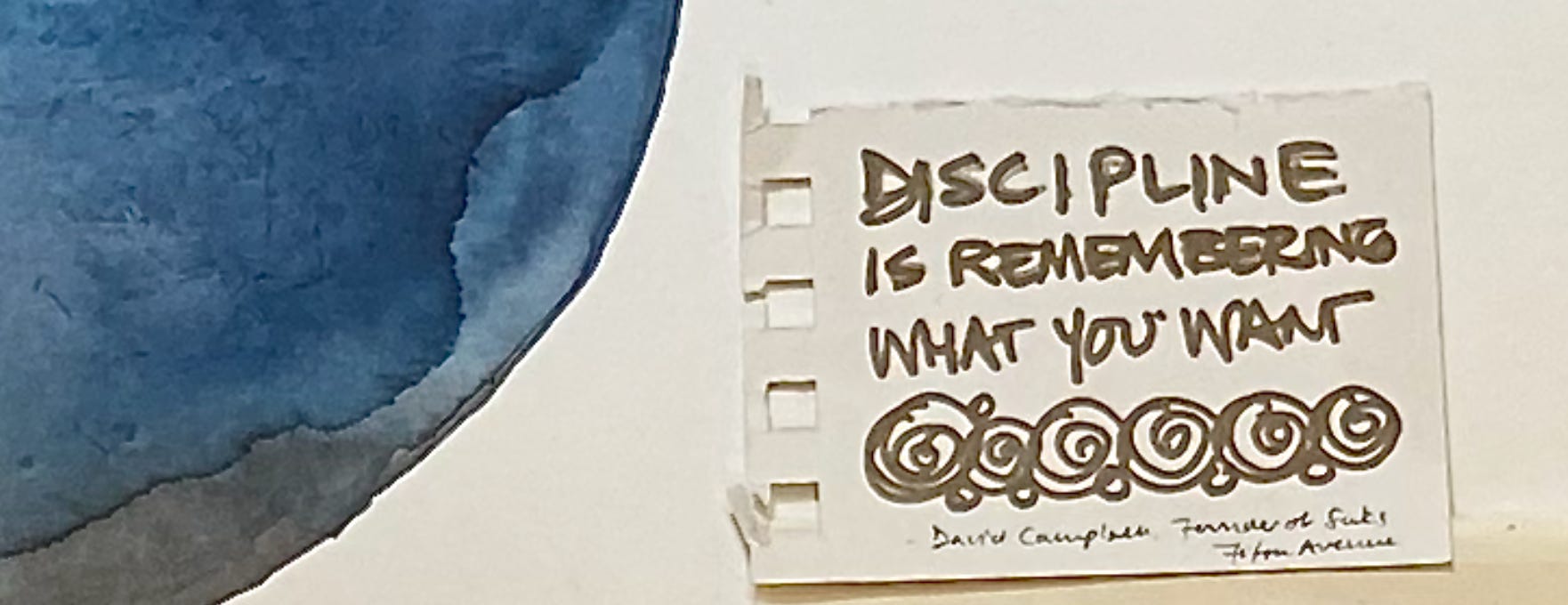
Patterns and rhythms help. They help us to invite and practise pausing. By hunting out and embedding reliable markers, we can weave regular pauses into the ordinary fabric of our days. Lighting a candle as we wake. Creaming our feet before bed. Holding a brief silence at the start of a meal... or a meeting. Looking up when we step outside. Smiling at the first stranger. These micro-moments interrupt our momentum. Shifting our stance. Shaping our gaze.
~
Which brings me to some questions that seem worth pondering:
For myself: What kinds of pauses are already part of my everyday life? Is there a particular daily ‘pausing place’ I want to nurture? What prompt could help me lean into this practice?
And collectively, when I think about work I’m doing with others (where ‘work’ encompasses all labour, and not simply activity we might be paid for): In our group, how do we currently invite pauses? Is there a regular communal pausing place we want to institute for a season? What would ‘starting small’ look like?
With love as we journey,
Wendy
WORTH SHARING
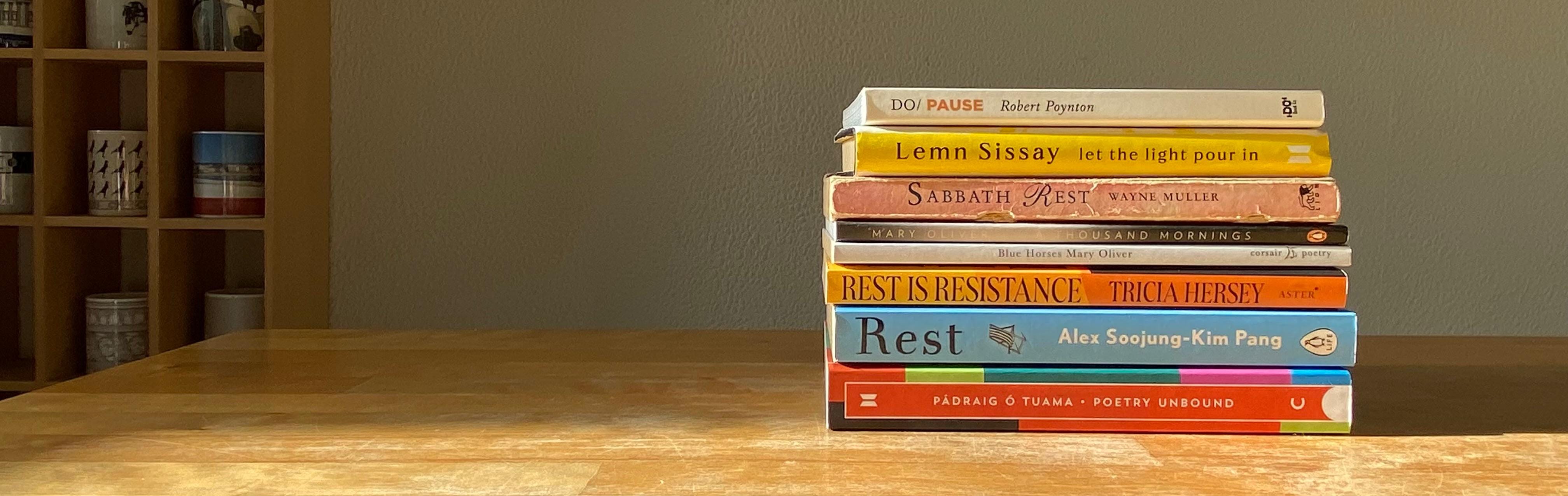
These treasures come to mind when I think of ‘pausing’. I’m offering them here in case they can be a gift to you also:
The rhythm and repetition within Pachelbel's Canon in D is a balm, and while often chosen for weddings, I feel it needs to be reclaimed for more ordinary pursuits, like a little moment of nourishment in the midst of a dense day.
Julie Johnstone’s artwork invites the most delicate visual pauses as she plays with words and tones, all held within spacious paper places.
Do Pause by Robert Poynton is a wondrous little collection of musings on the texture of pausing. And the book is beautiful too.
Poetry is an easy go-to for me as a way of inhabiting a pause. If you need a place to start, Mary Oliver (for example, her ‘Blue Horses’ or ‘A Thousand Mornings’) and the short yet spacious ‘Poetry Unbound’ podcasts (and book) with Pádraig Ó Tuama remain firm favourites and are accessible places to begin. For little snippets each morning, Lemn Sissay’s ‘Let the Light Pour In’ is a treat.
Rest by Alex Soojung-Kim Pang provides powerful evidence-based insights on the importance of rest for creativity, health, and the work we seek to do in the world.
Sabbath by Wayne Muller draws on practices in different faith traditions by looking at the practices of rest and the wisdom of pausing in our lives – individually, in our local communities and in the world.
Explore the social justice framing of rest with artist, theologian and activist Tricia Hersey who wrote the manifesto Rest is Resistance. This 24min interview provides a good introduction and includes this nugget: “Resting is part of the strategic plan for people who are activists and organisers, because rest is generative”.
END NOTES
Gratitude: This letter is dedicated to the wide variety of people who have been part of ‘Pausing Place’ down the years. Some joined for one evening while visiting the city while others became part of the regular rhythm including helping to host evenings and make food. I remain so grateful for your presence and the way we held space for each other (and the world), each time we gathered. Thank you. From the depths.
~
Image credits: Unless otherwise indicated, all photos and illustrations are my own. Please be in touch if you’d like to republish them.
~
If there are specific things in the form or content that land well with you, do let me know. If you think this letter could be a gift to others, please pass it along. And definitely unsubscribe if you find it isn’t worth your time ;-) #todayisallwehave #makingchoices